

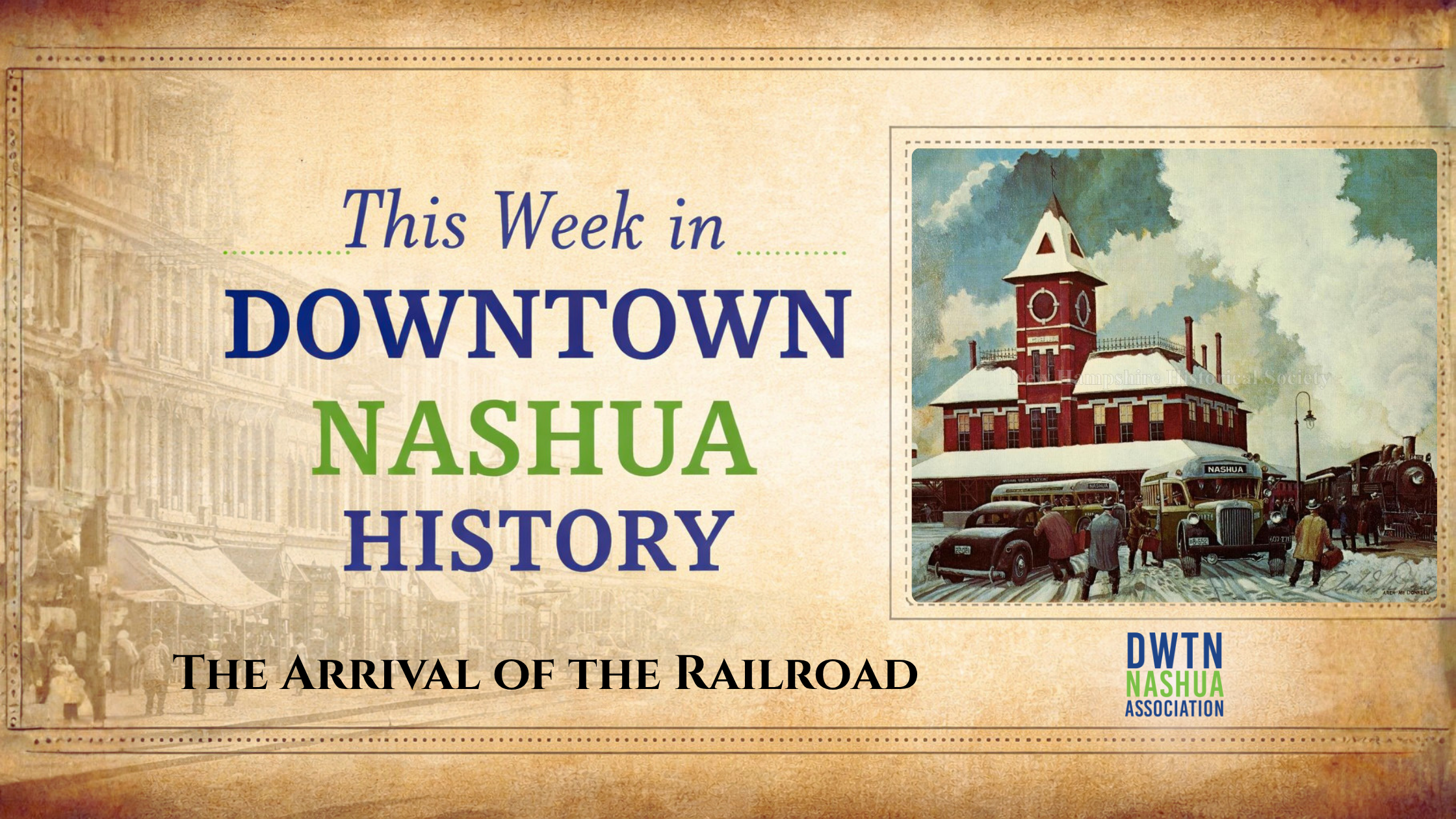
Long before highways connected New Hampshire to the rest of New England, the biggest transformation in downtown Nashua arrived on iron rails.
In 1838, the opening of the Nashua and Lowell Railroad marked a turning point for the city. It was the first railroad in New Hampshire, connecting Nashua directly to Lowell, Massachusetts, and beyond. Almost immediately, it brought a surge of passengers and goods into the growing mill town.
The impact on downtown was dramatic. Textile mills could now ship products faster and more efficiently, and raw materials arrived in greater quantities. Businesses clustered near rail lines, and areas around stations became centers of activity. In fact, the arrival of the railroad was so significant that parts of downtown were even renamed. Union Square became “Railroad Square” in 1838, reflecting its new role as a transportation hub.
Over time, Nashua became a major rail crossroads, with multiple rail lines converging in the city to support its booming industrial economy. These connections helped transform Nashua from a small mill town into a thriving industrial city with strong ties to Boston and the wider region.
Today, while the trains are less visible in downtown, their legacy remains. The layout of streets, former rail corridors, and even local rail trails all trace back to the moment when the railroad first reshaped Nashua’s future.
The Arrival of the Railroad
Share this content
You Might Also Like

This Post Has One Comment
Comments are closed.


Good story. Interesting.